
From early times, humans adapted how they work, learn, interact with the world through new technology. Technology aids us with accomplishing a task; however, each tool brings its own affordances and constraints. A good instructional tool for learning is unobtrusive so students can focus on learning. We can select the best tool using the heuristics of technology; pedagogy; usability and accessibility; and sustainability—even when considering tools as vastly different as simple machines to books to generative artificial intelligence (AI).
Continue reading “Course Design: Choosing an Instructional Tool Using Pedagogy and Best Practices”Category: Instructional Design
The (Lego) Building Blocks of Instructional Design
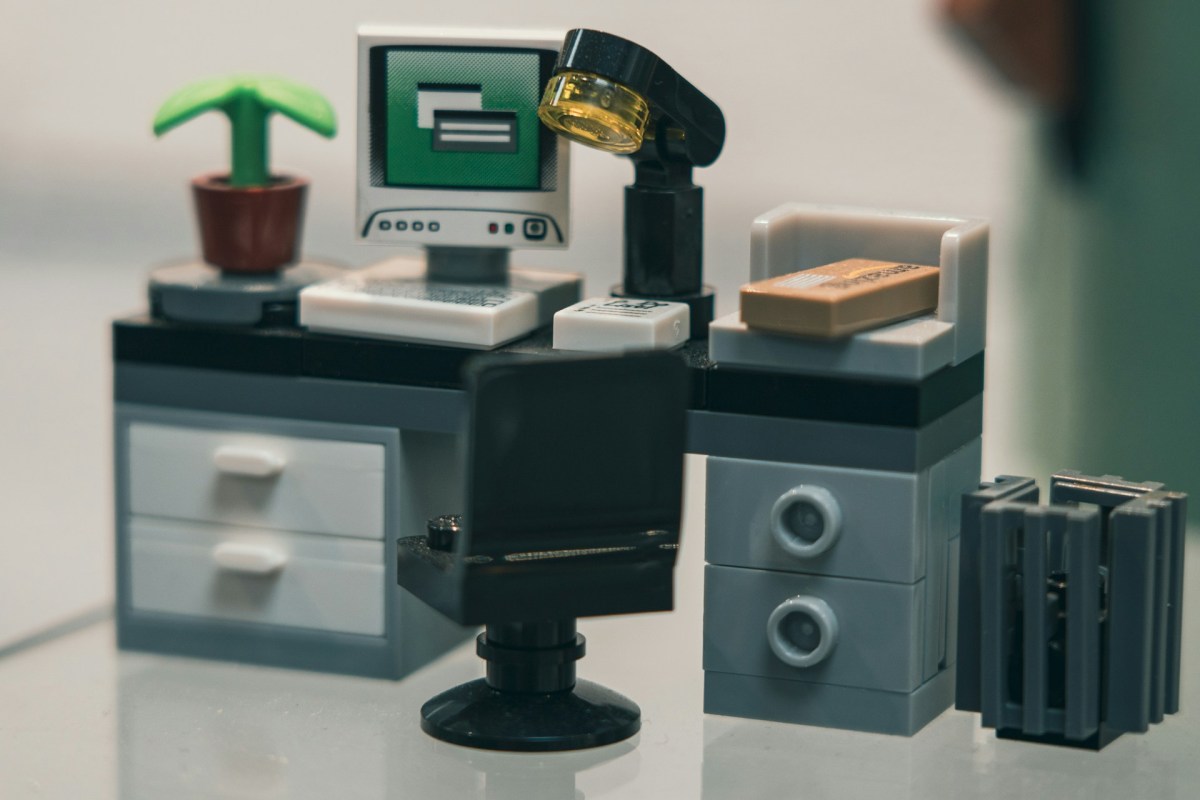
Our team has been quite busy with several high-priority projects around a new LMS and academic calendar—all due in July. So, when former team member Dave Zokvic (see Model eLearning contributions) offered to write a guest post for Model eLearning, I jumped on the chance to work with him once more.
When I was a kid, I loved Lego. Whether assembling a complex set like the space shuttle or scrounging through garage sales for tubs of tiny plastic bricks, there’s something just satisfying about snapping blocks together and transforming imagination into reality. Well into adulthood, my mother would still buy me small Lego sets each Christmas. Eventually, the tradition died out, and my bricks sat gathering dust in the basement.
Last Christmas, I rediscovered my love of Lego when my nephew received a set. As I was regaled with a story of how much fun he was having with it, I said to myself “Wait a minute, why should he get to have all the fun!?” So, because I’m an adult, I went and bought some Lego.
And some more Lego.
And more.
Continue reading “The (Lego) Building Blocks of Instructional Design”Finding the Middle Ground: Connecting the Dots between Learner Needs and Learning Theory

This post was co-wrote by Ann Broda and Jess Pierce .
A course’s design includes many dynamics which can alter how it’s implemented. In addition, the instruction process may provide different results when it comes to meeting objectives, therefore the success of a course and its impact on student learning varies greatly. With these differences in learning spaces and learners it is often hard to know where to begin with design. But, even with various learning environments and stakeholder needs, some concepts of course design and evaluation transcend being environmentally specific—and these heuristics can be helpful tools for all learning spaces. As Ann and I reviewed various concepts and theories behind course design for this blog post, we discovered two essential components instructional designers can use in course design to create effective learning and the positive results of implementing them in the online modality: learning needs analysis and Constructivism.
Continue reading “Finding the Middle Ground: Connecting the Dots between Learner Needs and Learning Theory”Meaningful Traditions: Reflecting on 2023

Christmas traditions vary from family to family and person to person. But whether it’s decorating with lights to brighten the long winter nights, hanging stockings on the mantel, or placing a manger in a prominent location for all to see, these traditions seek to fill the season with significance and cheer.
Each December, our team enjoys the tradition to pause and reflect on the research and resources we share on the website. And we hope this tradition of reflection brings meaning to our Model eLearning community. With 2024 only a couple weeks away, it’s time to for the traditional review of the highlights of 2023.
Continue reading “Meaningful Traditions: Reflecting on 2023 “Instructional Design for Mental Health

When instructional designers or subject matter experts (SMEs) design a course, students’ mental health often unintentionally gets overlooked. Courses that overlook students’ mental health, even unintentionally, show a lack of empathy and understanding on our part.
Continue reading “Instructional Design for Mental Health”Collaborative and Social Learning Tools for eLearning

Authentic engagement between students and instructors is immensely important in eLearning. That being said, both collaborative and social learning are the heart behind any virtual course. Not only that, but researchers at the University of Calgary Taylor Institute for Teaching and Learning describe these modes of learning as an “opportunity for students and instructors to engage in shared efforts to search for meaning, understanding, and solutions to complex problems or concepts” (Anselmo et al., n.d.). Thankfully, the rapidly-developing sector of collaborative and social learning tools allows us to provide these opportunities for authentic engagement.
Continue reading “Collaborative and Social Learning Tools for eLearning”Digital Content Curation Tools for Education

Digital content curation tools allow us to easily create, collaborate, share, and evaluate educational resources and collections. With “[…] advances in technology, enhanced tools allow researchers to preserve their work in new venues and formats to reach new audiences. (Deschaine & Sharma, 2015, p. 20). In Curating an Instructional Content Collection for Teaching and Learning, I shared how to use content curation in course design to provide accurate, relevant learning resources and model 21st century information literacy skills. In this post, I’ll discuss digital tools for curating educational content.
Continue reading “Digital Content Curation Tools for Education”Building Learning Environments to Engage Our Learners’ Attention Span

An interesting development within the expanding research on the brain and its functions is the study of attention spans in humans. Based on the new information and data found in these studies, we can build learning environments that are more interesting to our students as they are able to engage in the content more effectively since it aligns with the way their brains prefer to engage in the world.
Continue reading “Building Learning Environments to Engage Our Learners’ Attention Span”Curating an Instructional Content Collection for Teaching and Learning
Content continues to be published at staggering rates—and it’s only likely to increase. With the proper equipment, time, and an internet connection, anyone can publish content with relatively low effort. The value and accuracy of this content might not go through vigorous quality checks (or may be outright fictitious and created for malicious purposes), which means we must become savvy to identify, evaluate, and share the best resources.
Continue reading “Curating an Instructional Content Collection for Teaching and Learning”A Melting Pot of Learning

(While I try to speak without bias, I should note that I have a Western Mind model and come from the Euro-American cultural background. I welcome any comments to discuss these ideas in greater depth as I find this topic very fascinating and relevant to what we need to be discussing in this day and age. The more perspectives we can gain from others the more we learn about their culture and our own biases.)
As an instructional designer, familiarity with how to make learning material (in whatever modality) reach as many students as necessary and possible in ways they can comprehend is essential. In this pursuit, we focus on topics such as accessibility, universal design for learning (UDL), and inclusion. However, in addition to those, I have been exploring an area that could use more data—the integration of cultural understanding in learning design.
Continue reading “A Melting Pot of Learning” Model eLearning
You must be logged in to post a comment.